
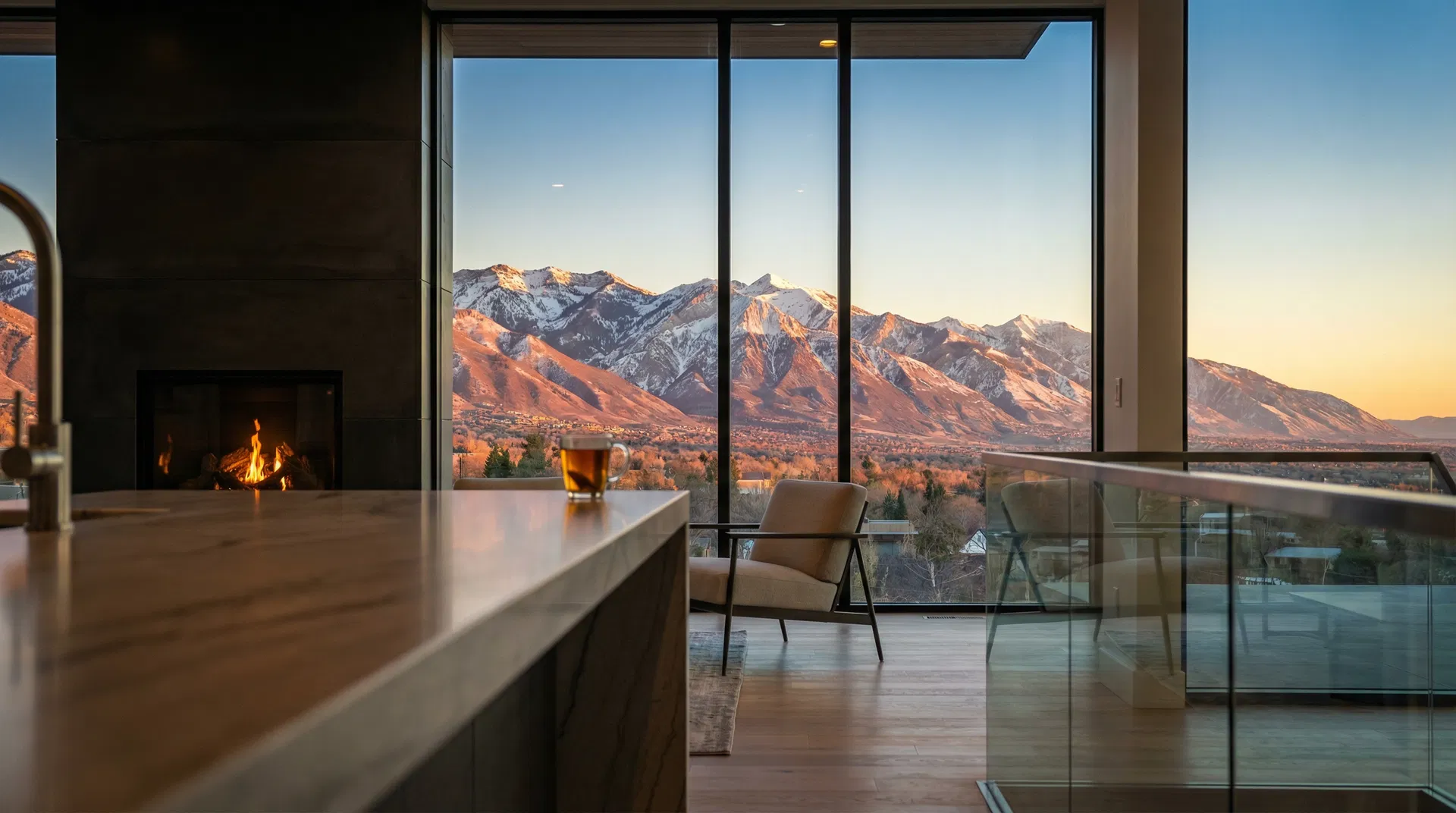
Promontory is what happens when a developer sets out to build not just a golf community, but a complete second-home world. Spread across roughly 6,400 gated acres northeast of Park City, it pairs signature golf from Pete Dye and Jack Nicklaus with an amenity program broad enough that plenty of members barely touch the courses — clubhouses, pools, trails, winter tubing, dining, and family programming that runs year-round. If Deer Valley is about the mountain, Promontory is about the club.
The community has become one of the most popular addresses in the Park City area for second-home owners, and for a reason: it solves the "what do we do today" problem for multi-generational families better than almost anywhere in Utah. Grandparents golf, kids swim, teenagers disappear to their own spaces, and everyone reconvenes at dinner without leaving the gates.
The real estate spans a wide range — from turnkey cabins and townhomes to large custom estates on view lots — and the buying process here has a wrinkle that first-time Promontory buyers need to understand: the club membership is a separate transaction from the home itself. That's exactly the kind of detail where local representation earns its keep.
The Real Estate
Promontory's scale — roughly ten square miles inside the gates — means the housing stock is unusually varied for a private community:
- Custom homes and estates anchor the market, many on generous view lots oriented toward the Park City ski resorts to the west or the Uinta Mountains to the east. Architecture skews mountain-contemporary, and the newer construction rivals anything in the region.
- Cabins and cottages offer a turnkey, lock-and-leave alternative — smaller footprints, often clustered near amenities, popular with owners who want the club lifestyle without stewarding a large home from out of state.
- Townhomes and villas round out the entry points, and tend to be the most attainable way into the community.
- Homesites remain available in various neighborhoods for buyers who want to build, though as the community matures, the best view lots get scarcer.
Pricing spans a wide spectrum — wider than most people expect — from the townhome product up to estates that compete with the top of the Park City market. Two structural notes matter: HOA and club costs are a real part of the ownership equation here and vary by property, and views are the currency of the lot market. Two similar homes on different ridgelines can live very differently.
Location & Access
Promontory sits northeast of Park City, accessed off I-80 via the Browns Canyon corridor. In practice that means about fifteen minutes to Kimball Junction — groceries, restaurants, the Whole Foods run — and a comfortable drive to Park City's Main Street and the ski resorts beyond. Salt Lake City International Airport is generally under an hour, which keeps the fly-in, fly-out rhythm easy for second-home owners.
The location involves a trade-off, and I'd rather you hear it from me than discover it later: you are not slopeside here, and you're not walking to Main Street. Winter days involve driving to the resorts. What you get in exchange is elbow room — big skies, open ridgelines, and a sense of space that in-town Park City simply can't offer — plus noticeably more house and land for the money than comparable resort-adjacent addresses.
One more practical note: it's a large community, and internal drive times are real. A home deep in the eastern neighborhoods is a different daily experience than one near the gatehouse or the main clubhouse cluster. When we tour, I map properties against the amenities you'll actually use, because "in Promontory" covers a lot of ground — literally.
The Lifestyle
Golf is the headline: a Pete Dye signature course and a Jack Nicklaus signature course, both consistently regarded among Utah's best, each with its own character — the Dye dramatic and sculpted, the Nicklaus more classic mountain golf. But what actually sells Promontory, in my experience, is everything around the golf.
The club operates multiple clubhouses and amenity houses across the property, covering swimming, tennis and pickleball, fitness and spa facilities, kids' programming, and casual and fine dining — plus a beach-style amenity out at the Jordanelle Reservoir for summer boating days (offerings evolve, so I always confirm the current amenity lineup with the club). Winter brings its own program: tubing, ice skating, snowshoeing, and shuttle convenience toward the ski resorts, so the community doesn't hibernate when the golf courses close.
The demographic tilts toward families and second-home owners — this is a place built for school-break migrations and summer-long stays — though the full-time population has grown meaningfully. The culture is social but unpretentious; it's the kind of club where kids on bikes outnumber blazers. If your vision of mountain life is centered on a community rather than a chairlift, Promontory is the strongest version of that in the Park City area.
Buying Here — Ethan's Take
The single most important thing to understand about Promontory: buying the home does not automatically buy the lifestyle. Club membership is a separate, deposit-based transaction with its own categories, costs, and processes, and the amenities that make Promontory special sit behind that membership. Structuring the home purchase and the membership correctly — and understanding what conveys, what doesn't, and what the current membership terms look like — is where deals here go smoothly or sideways. I walk every buyer through this before we write an offer.
Beyond that, my honest guidance: buy the lot and location first, the house second. Views, sun exposure, and proximity to the amenities you'll actually use drive both daily happiness and long-term value here more than finish selections do. And be realistic about the trade-off — if slopeside skiing is the heart of your vision, Deer Valley money goes further at Deer Valley. If a full-calendar family basecamp is the vision, nothing else in the area competes.
Why Sotheby's matters in this market: Promontory's buyer pool is national — Texas, California, Florida, the Midwest — and Summit Sotheby's International Realty's referral network is often how those buyers arrive. On the listing side, that reach matters; on the buying side, our team's day-in, day-out presence inside the gates means current intelligence on club terms, upcoming inventory, and which neighborhoods are trading well.