
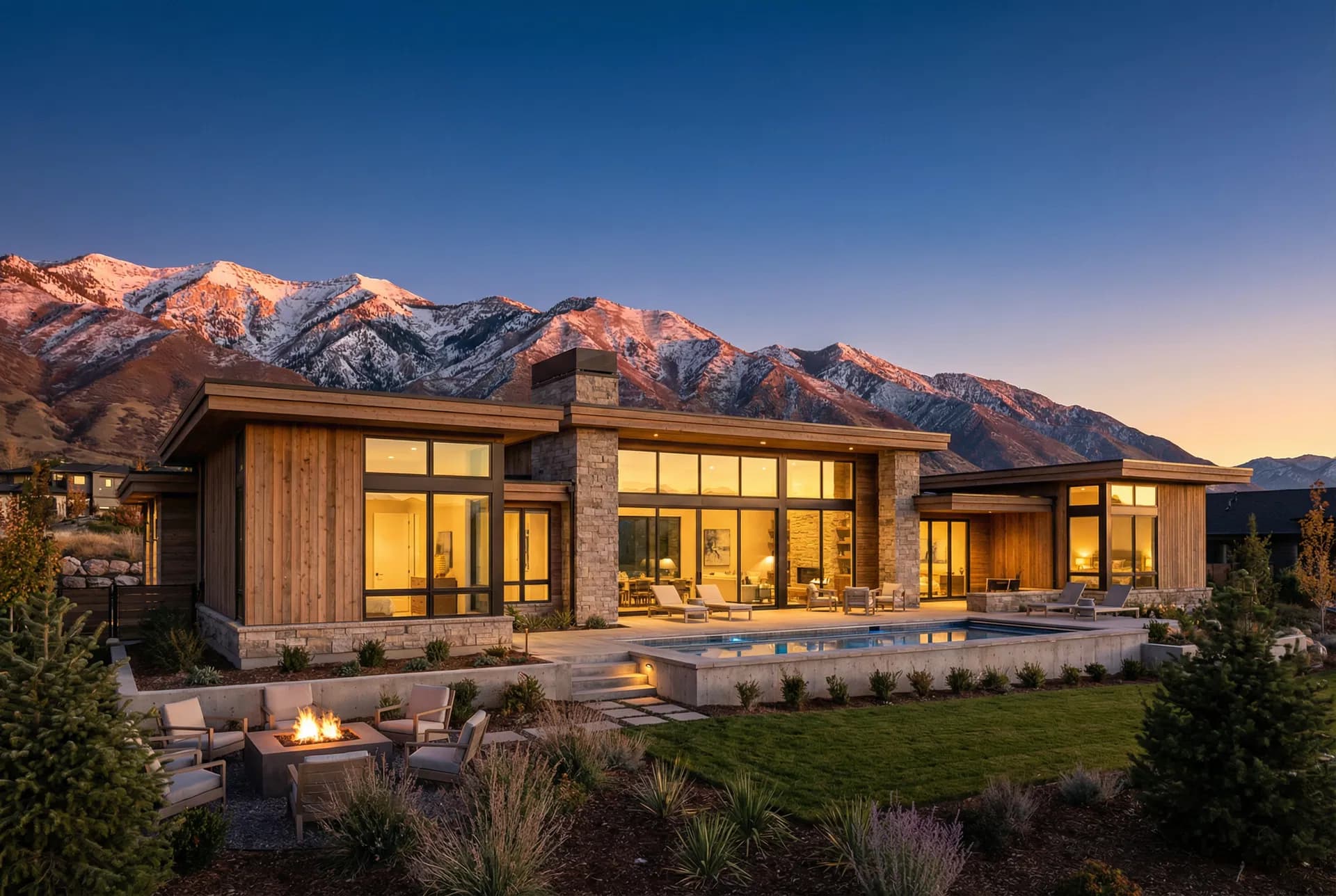
Salt Lake County · Utah
Sandy, Utah
Established Neighborhoods, Mountain Access
$642,000
Median Home Price
+2.2% year over year
Price Trend
22 days
Avg. Days on Market
191
Active Listings
About Sandy
Living in Sandy, Utah
Sandy, Utah strikes the perfect balance between established community character and outdoor adventure. Located at the mouth of Big Cottonwood Canyon, Sandy residents enjoy some of the best ski access in the world — Brighton and Solitude resorts are just 20 minutes away. The city's mature tree-lined streets, strong community identity, and excellent schools make it a perennial favorite for families. Sandy's real estate market offers excellent value compared to neighboring Draper, with a wide range of homes from starter condos to luxury estates.
96,000+
Population
$88,000
Median Income
8/10
School Rating
Salt Lake County
County
Canyon Access
Sandy sits at the mouth of Big Cottonwood Canyon, giving residents quick access to Brighton and Solitude ski resorts, hiking, and mountain biking.
Established Character
Mature neighborhoods with large lots, established trees, and a strong sense of community that newer suburbs simply can't replicate.
Canyons School District
Sandy is served by Canyons School District, one of Utah's most innovative districts with strong academic programs and extracurriculars.
Strong Value
Sandy offers more home for your money compared to Draper, with median prices around $642K and consistent year-over-year appreciation.
Local Knowledge
Living in Sandy: The Full Picture
Neighborhoods & Where to Live
Sandy is best understood as a gradient that runs west to east, from the I-15 corridor up to the granite face of the Wasatch. As you move east and gain elevation, lots get bigger, homes get newer or more extensively remodeled, and prices climb with the terrain. Knowing where a listing sits on that gradient tells you half of what you need to know before you ever walk through the door.
The heart of Sandy is its 1970s-through-1990s housing stock — and I mean that as a compliment. These are established neighborhoods with mature trees, real yards, and floor plans that respond beautifully to renovation. A huge share of my Sandy transactions are exactly this: a solid 1980s two-story that someone has opened up, and it lives better than new construction at a friendlier price point. Newer infill projects have filled in the remaining gaps, so you'll occasionally find a 2010s home on a street of 1985 neighbors.
East of about 1300 East, the bench neighborhoods take over. Willow Creek, built around the country club, is one of Sandy's classic prestige addresses. Farther southeast, the streets below Bell Canyon put you at the foot of some of the most dramatic granite scenery in the valley — homes there trade on that backdrop. Pepperwood, the gated community the city page mentions, anchors the top of the market.
Don't overlook Historic Sandy, the original town grid near the TRAX station of the same name. It's a small pocket of older homes and genuine character in a city that's mostly postwar suburban, and it offers some of Sandy's more attainable entry points.
Schools & Education
Sandy sits almost entirely within Canyons School District, which keeps things simpler than in some neighboring cities where district boundaries split the map. The two flagship public high schools inside Sandy are Alta High on the east side and Jordan High near the historic center, with Brighton High serving areas just to the north in Cottonwood Heights. Each has its own feeder pattern of middle and elementary schools, and as with anywhere, I verify the exact assignments for a specific address before a client writes an offer — boundaries shift over the years, and assumptions are expensive.
Alta High tends to be the name out-of-state buyers ask about, largely because the east-bench neighborhoods that feed it are the ones they're shopping. Jordan High is one of the older high schools in the valley with deep community roots — multi-generation Sandy families are often Jordan families, and that loyalty is real.
On the private side, Sandy is home to the Waterford School, widely regarded as one of Utah's strongest independent schools, drawing families from across the valley. Having it inside city limits is a meaningful convenience for households considering that route. There are also charter options in and around Sandy for families who want an alternative within the public framework.
One practical note I share with relocating parents: because Canyons District covers Sandy, Draper's east side, and the cottonwood-adjacent communities, moving within the area later doesn't necessarily mean changing districts — a flexibility that matters more than people expect when they're planning five or ten years out.
Commute & Location
Sandy occupies the mid-valley sweet spot, and for two-career households that's often the deciding factor. Downtown Salt Lake City is roughly 20 to 25 minutes up I-15 in normal traffic; the Silicon Slopes offices in Lehi are a similar run south, on the far side of the Point of the Mountain. If one of you works north and one works south, Sandy splits the difference about as well as any city in the valley can.
Transit here is more than a talking point. The TRAX Blue Line runs through Sandy with multiple stations, including Historic Sandy and the civic center area, so a downtown commute without a car is a realistic daily pattern — park once, ride in, skip the freeway entirely. For east-side residents, the practical question is the drive to the station, which is usually 10 minutes or less.
Surface streets matter in Sandy more than newcomers expect. The 9000 South and 10600 South corridors carry the east-west load between the freeway and the bench, and your position relative to them shapes daily life more than raw distance to I-15 does. When I preview homes for commuting clients, I note which corridor the house actually uses, not just the mileage.
The other commute that defines Sandy is the one toward the mountains. Big Cottonwood Canyon's resorts — Brighton and Solitude — are roughly 25 to 30 minutes away, and Alta and Snowbird up Little Cottonwood run about 30 minutes via the adjacent canyon mouth. On a powder morning, that proximity is the whole reason some of my clients bought here.
Lifestyle & Recreation
Sandy's recreation story starts with the canyons, but I want to dwell on what's inside the city, because it's underrated. Dimple Dell Regional Park is the best example — roughly 640 acres of natural gulch running through the middle of eastern Sandy, laced with sandy hiking and equestrian trails. It's a genuine wilderness corridor inside a suburb, and homes along its rim enjoy permanent open space behind them that no developer can touch. Walking it in October, you'd never guess you're minutes from a freeway.
At the mountain edge, the Bell Canyon trailhead is the local proving ground — a steep, beautiful hike to a reservoir under serious granite walls, close enough for an after-work outing. And of course the ski access covered above doubles as summer access: hiking, climbing, and cooler evenings up Little and Big Cottonwood all season long.
Sandy is also, quietly, one of the valley's entertainment hubs. America First Field brings Real Salt Lake and Major League Soccer to town — game nights are a legitimate community ritual here. Hale Centre Theatre's home in Sandy draws theatergoers from across Utah, and the Sandy Amphitheater runs an outdoor concert season with valley views. The Shops at South Town anchors a retail corridor along I-15, with the Scheels store as its own strange and wonderful destination — my out-of-town clients don't believe me about the Ferris wheel until they see it.
Stitch that together and you get Sandy's real pitch: it's one of the few places where a season of RSL games, a theater subscription, and a powder-day habit can all live within a 30-minute radius of your driveway.
Who Sandy Is Right For
The buyer I most often match with Sandy is the one who wants maximum Wasatch access without paying canyon-mouth premiums or committing to mountain living. If skiing, hiking, or climbing is your religion, Sandy's position at the base of both Cottonwood canyons is about as good as valley living gets — you keep normal commutes, established neighborhoods, and full city services, and you're still on the lift in half an hour.
The second strong fit is the value-conscious family. Sandy's core of 1970s-to-1990s homes means you can often get more square footage, a real yard, and mature trees for less than comparable space in Draper or Cottonwood Heights. For buyers willing to update a kitchen or embrace a little vintage oak, the math frequently works out in Sandy's favor — and Canyons District schools come with it.
Renovators and sweat-equity buyers specifically should have Sandy on their list. The housing stock is at exactly the age where dated-but-solid homes are common, and the gap between original condition and remodeled is wide enough to make projects worthwhile.
Sandy also suits people who want things to do without leaving town — soccer nights at America First Field, a show at Hale Centre Theatre, summer concerts at the amphitheater. Empty nesters downsizing from bigger east-bench homes often stay in Sandy for precisely this reason.
Who's a mismatch? Buyers set on new construction will find slim pickings outside scattered infill. Anyone wanting acreage or rural quiet should look further south. And if a walkable urban core is the priority, Sandy's car-first layout will frustrate you. For the mountain-minded, value-minded majority of my clients, though, Sandy is where the search gets serious.
Common Questions
Sandy Real Estate FAQ
What is the median home price in Sandy, UT?
The median home price in Sandy, Utah is approximately $642,000 as of early 2026, up 2.2% year over year. Sandy offers strong value compared to neighboring Draper.
What are the best neighborhoods in Sandy, Utah?
Popular Sandy neighborhoods include Alta Canyon (luxury, mountain views), Dimple Dell (large lots, established trees), Pepperwood (gated community), and East Sandy (close to Big Cottonwood Canyon).
How close is Sandy to ski resorts?
Sandy is one of the closest cities to Utah's world-class ski resorts. Brighton and Solitude in Big Cottonwood Canyon are approximately 20 minutes away. Park City resorts are about 45 minutes.
What school district serves Sandy, Utah?
Sandy is primarily served by Canyons School District, which covers the eastern Salt Lake Valley. The district is known for strong academic programs and innovative learning initiatives.
Is Sandy, Utah a good place to buy a home?
Sandy is consistently one of Utah's most popular cities for families. The combination of canyon access, established neighborhoods, good schools, and competitive pricing makes it an excellent long-term investment.
Ready to Buy or Sell in Sandy?
Ethan Holcomb is a local expert with Summit Sotheby's International Realty. Get a free consultation and personalized market analysis for Sandy.